Belisarius' First Battle
A few days ago I ran a test game for the Battle of Daras scenario with Comitatus rules in preparations for the game I will be hosting at the Society of Ancients Convention 16-18 October. The figures used are 15mm scale.

In AD 530, Belisarius is leading his first major command to defend the city of Daras from the Persians.

His poor quality Roman infantry are hunkered down in entrenchments hoping not to get hurt. Our game had a couple of bolt throwers in the entrenchments. It is unlikely that this would have been the case historically but for game purposes they represent catapults from the walls of Daras to the rear of the Roman battle line.

Outnumbering the Romans, the Persians are deployed in two lines. Baresmanas commands the first line of mostly light cavalry, and Pityaxes commands the second heavy cavalry line. Perozes, the commander in chief, is initially off table with a reserve of elite Immortal cavalry and a couple of elephants.

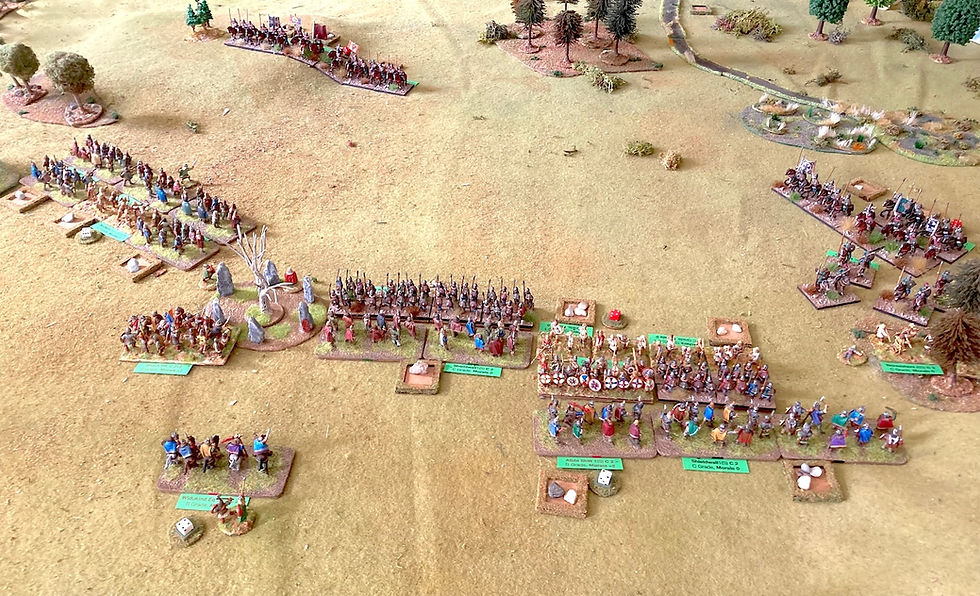
On the initial move, Baresmanas turns his contingent to the right in an attempt to outflank the Romans.

Pharas’ Heruls and Foederati are positioned behind a hill on the Persian right, hoping to attack the enemy on that flank.

The Persian shift to the right forces Pharas to show his hand. His men get ready to charge down the hill against Baresmanas’ advancing column. As they do, they being to take casualties from Persian archery.

On the other wing, Hermogenes leaves his Roman infantry in the trenches to lead his Massagetae around the Persian left flank.

After driving off the left-most Persian cavalry, the Huns pull back to regroup. Hermogenes continues to lead his Comitatus forward into the flank of the main Persian battle-line. In the combat that ensues Hermogenes is wounded but his men press forward to throw back their opponents.

A furious melée ensues as more as more troops from both sides pile in. The Romans gain the advantage, causing several Persian units to break.

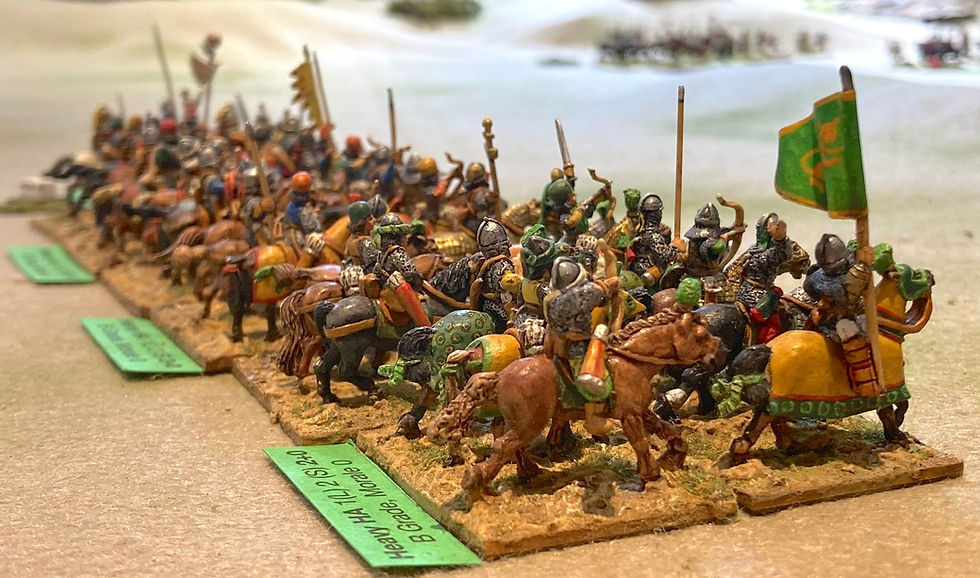
After a prolonged, inconclusive, archery duel in the centre, the main battle lines close in on each other. On the Persian right a couple of elephants have now come up from the reserve to discombobulate Pharas’ Heruls as the Persian heavy horse archers make ready to receive the enemy charge.

Pharas’s Heruls launch a ferocious attack against the Persians but they are overwhelmed by numbers and have been worn down by archery on the way in. They are surrounded and decisively defeated. Pharas himself only narrowly escapes capture.

Bouzes, leading the Roman centre, now charges the Persian line. The initial contact goes in Bouzes' favour but it is not conclusive.
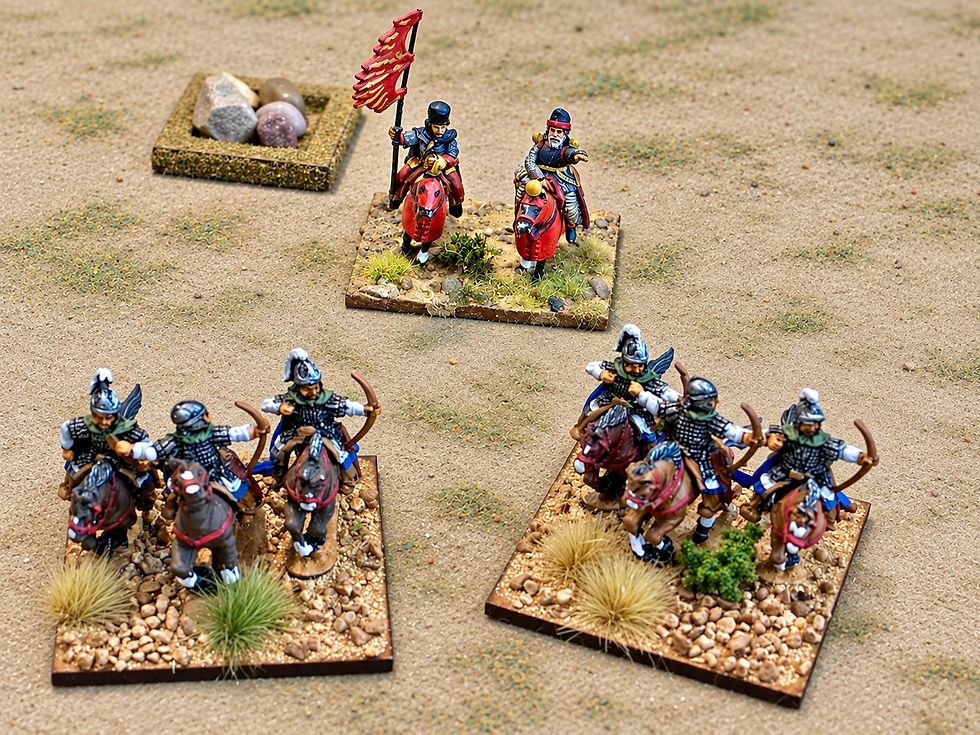
Perozes’ Comitatus succeeds in driving off one of the Roman cavalry units.

Then Belisarius leads his Bucellarii into the fray, driving back the Persians in the initial round of combat but getting the worst of it in the second round.
At this point the Romans have succeeded in breaking the Persian left wing and the Persians have done the same to the Romans on the other flank. The combat in the centre is flowing back and forth with success and failure on both sides.
The game, therefore is a draw. Both sides will pull back to try again another day. That will be on 17 October at the Society of Ancients Convention.

Comments